


Buy eye wash bottles
Available, delivery time: 1-3 days
Available, delivery time: 1-3 days
Content: 2 l (€42.09* / 1 l)
Available, delivery time: 1-3 days
Content: 0.2 l (€105.20* / 1 l)
Available, delivery time: 1-3 days

Content: 0.5 l (€49.74* / 1 l)
Available, delivery time: 1-3 days
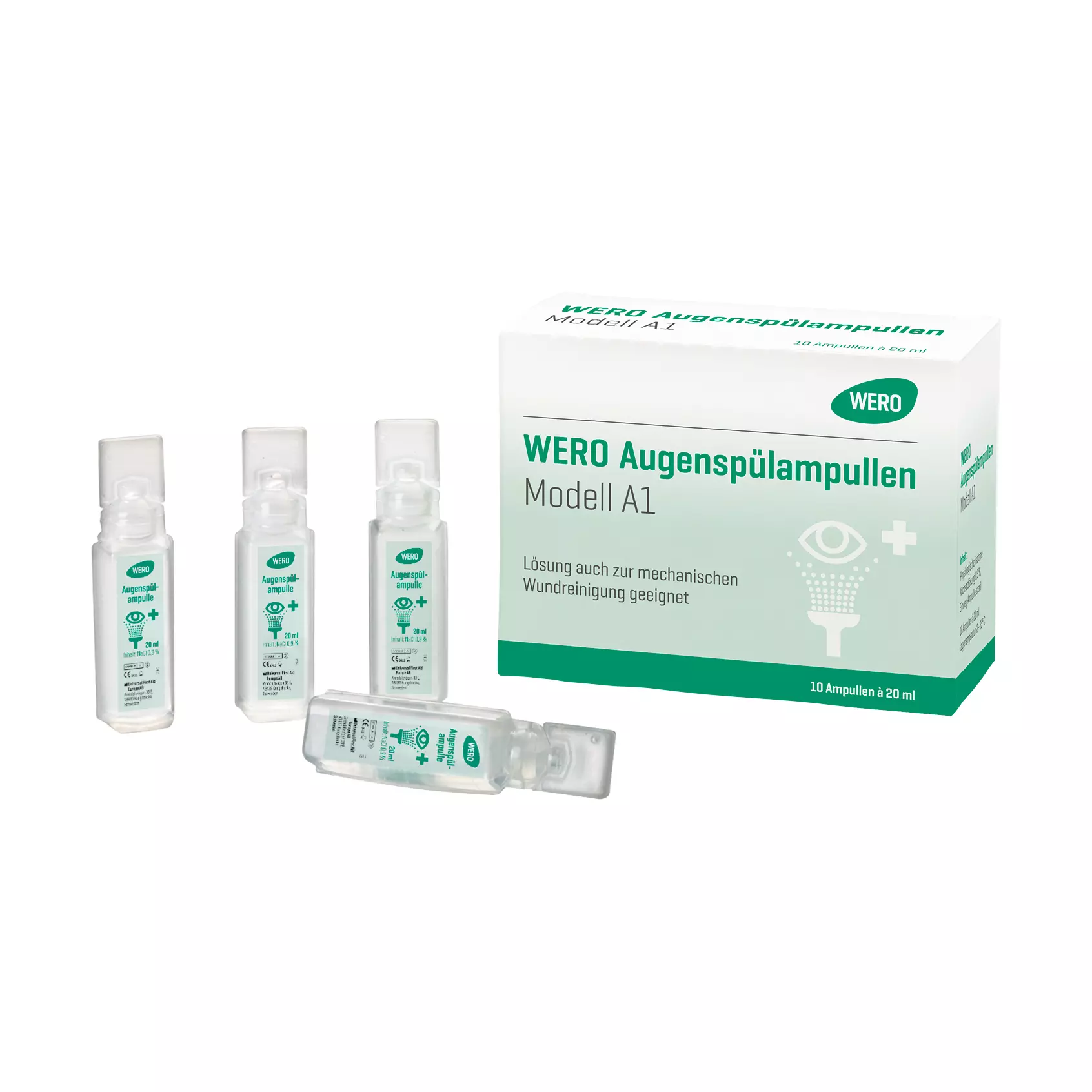
Content: 0.2 l (€143.20* / 1 l)
Available, delivery time: 1-3 days
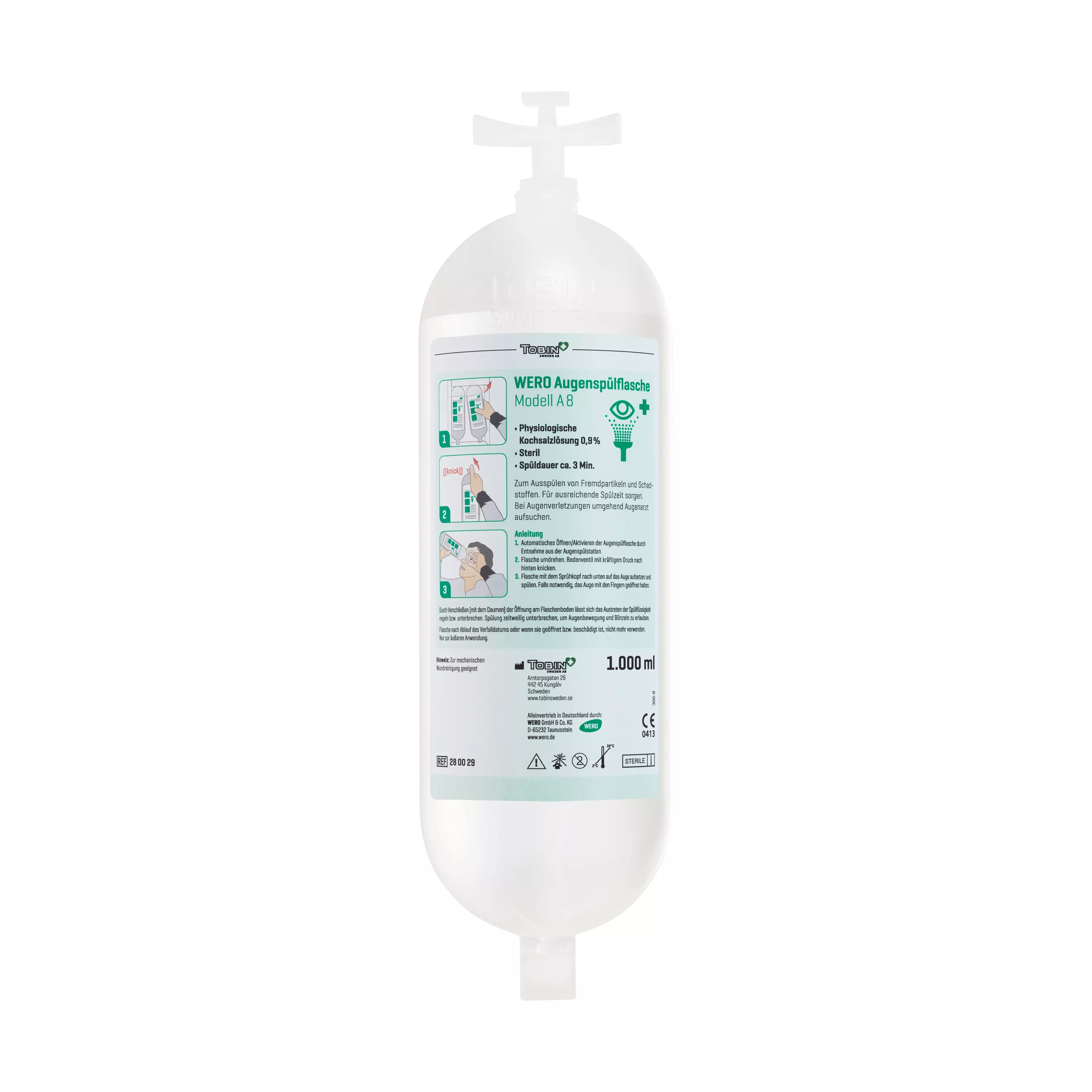
Content: 2 l (€35.11* / 1 l)
Available, delivery time: 1-3 days
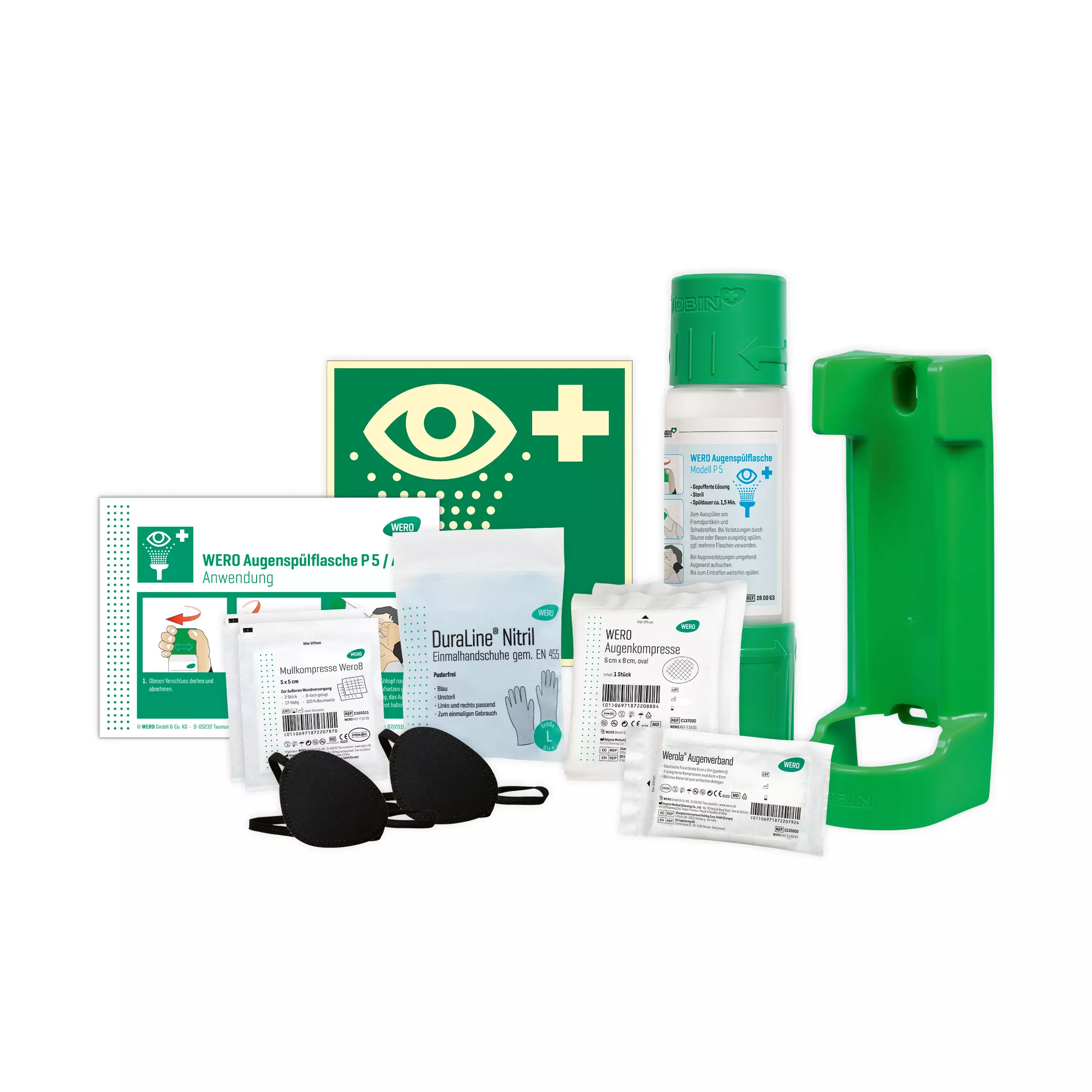
Available, delivery time: 1-3 days
Available, delivery time: 1-3 days
Content: 0.5 l (€55.26* / 1 l)
Available, delivery time: 1-3 days
Content: 0.2 l (€141.30* / 1 l)
Available, delivery time: 1-3 days
Content: 0.007 l (€1,524.29* / 1 l)
Available, delivery time: 1-3 days
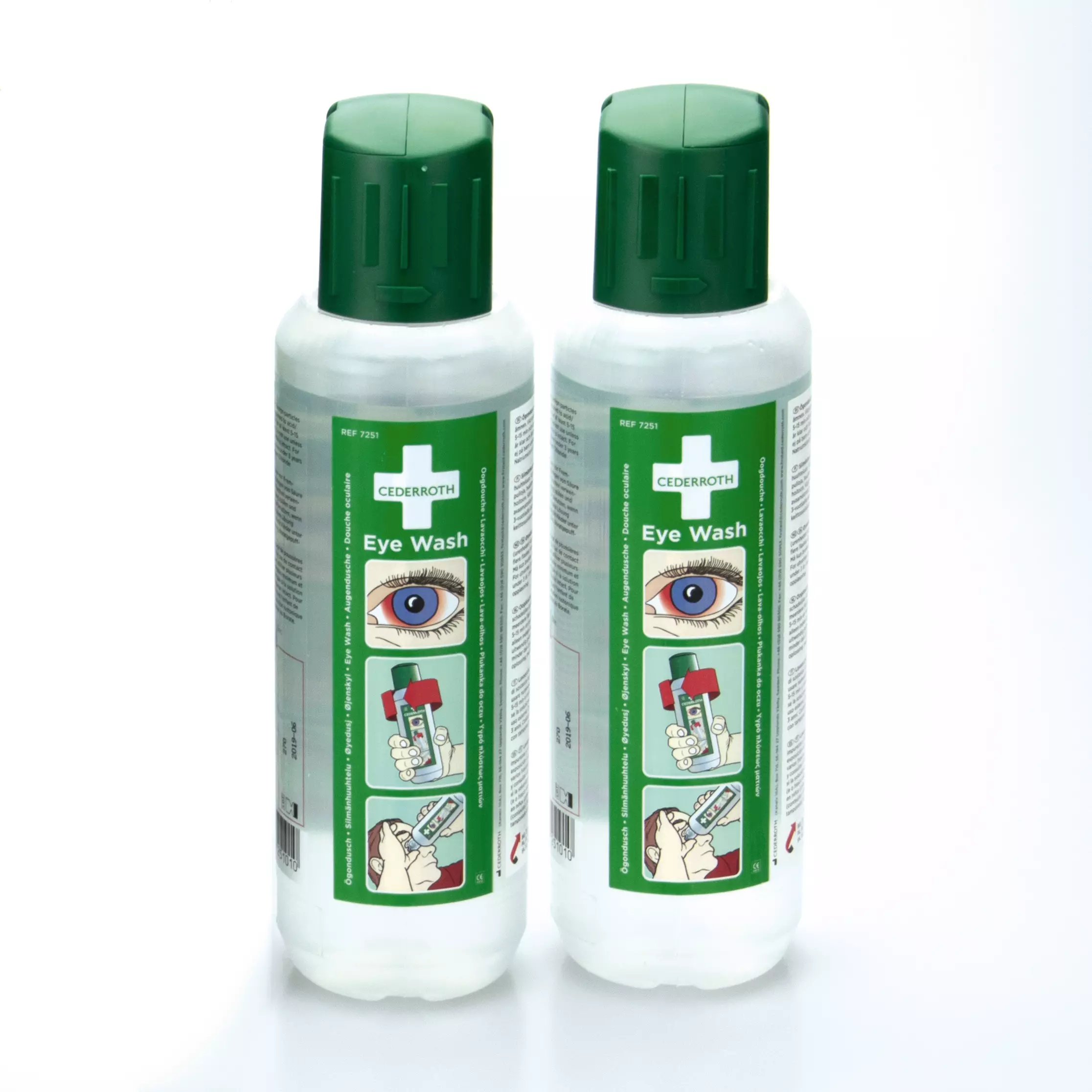
Available, delivery time: 1-3 days
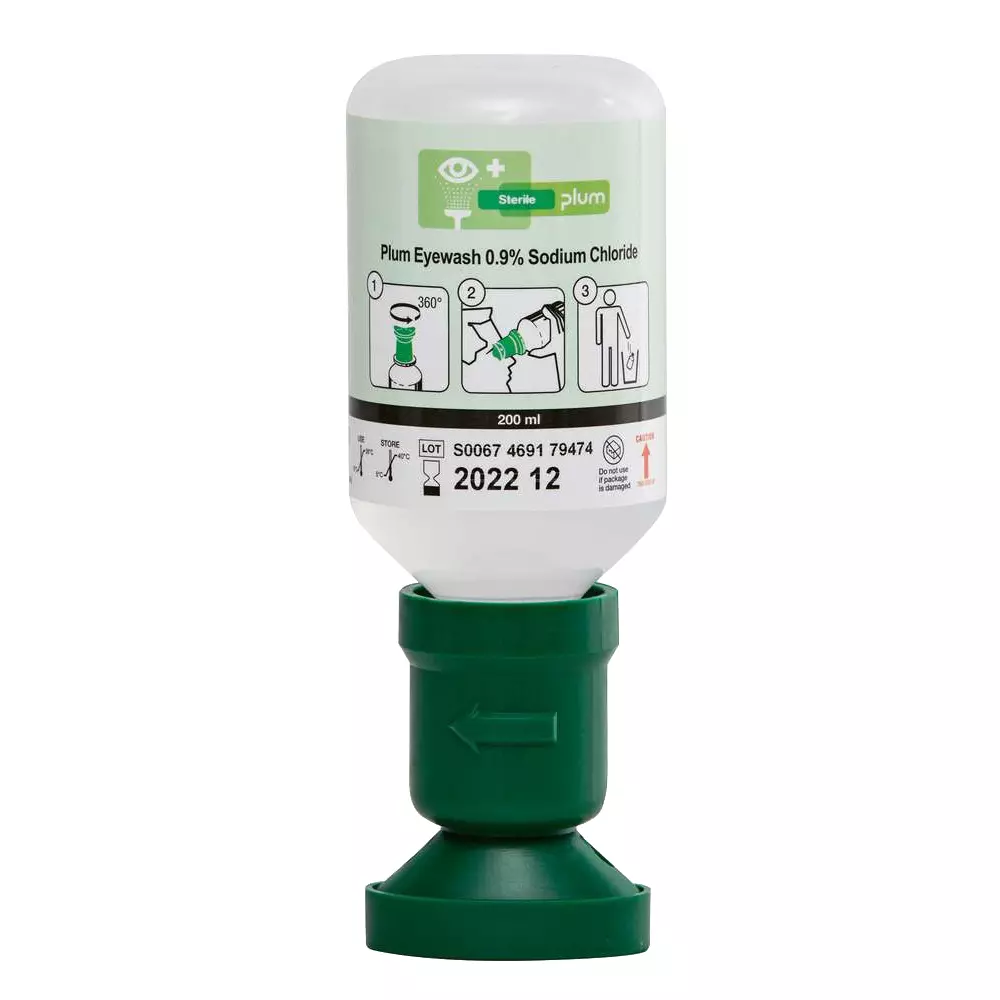
Content: 0.2 l (€110.20* / 1 l)
Available, delivery time: 1-3 days
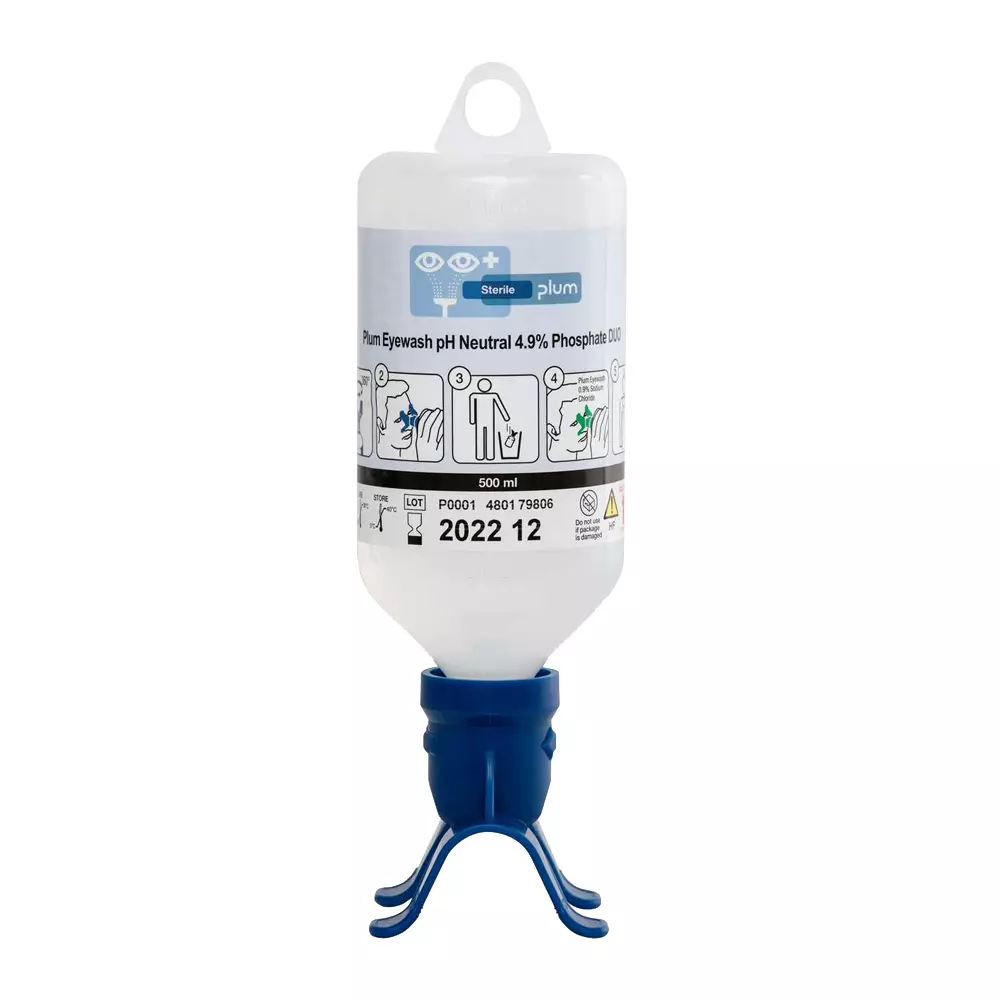
Content: 0.5 l (€81.14* / 1 l)
Available, delivery time: 1-3 days
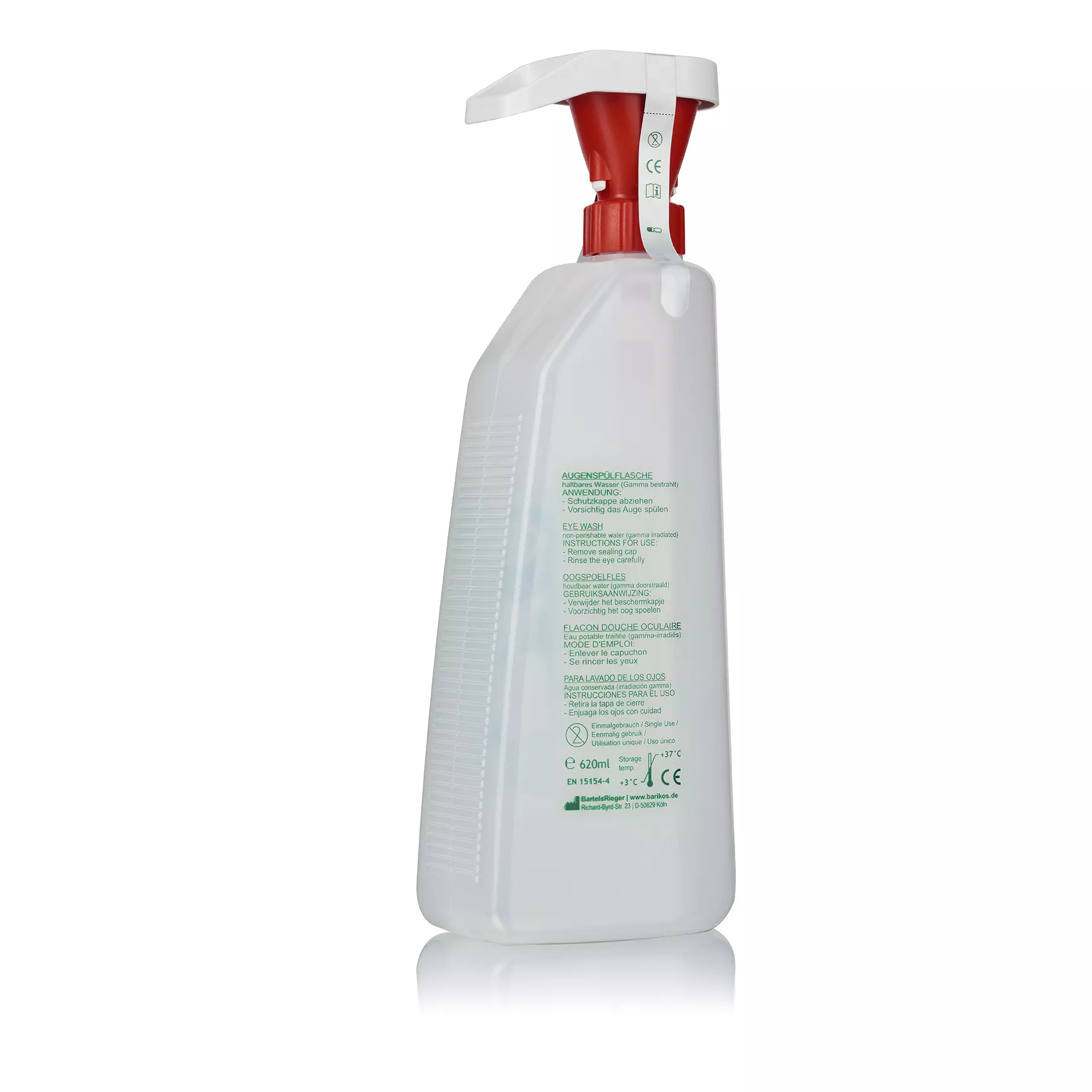
Content: 0.62 l (€63.63* / 1 l)
Available, delivery time: 1-3 days
Eye wash bottles for mobile and stationary use
Eye rinsing is used to remove or rinse out foreign bodies or chemicals that have accidentally landed in the eye.
In principle, eye accidents can occur in any work area and in any company. However, there are areas that are more hazardous. These areas include workplaces where, for example, cleaning agents, acids or other aggressive substances are used. In addition to liquids, foreign bodies also pose a risk of eye injuries.
Eye wash bottle with saline solution and buffered eye wash: what is the difference?
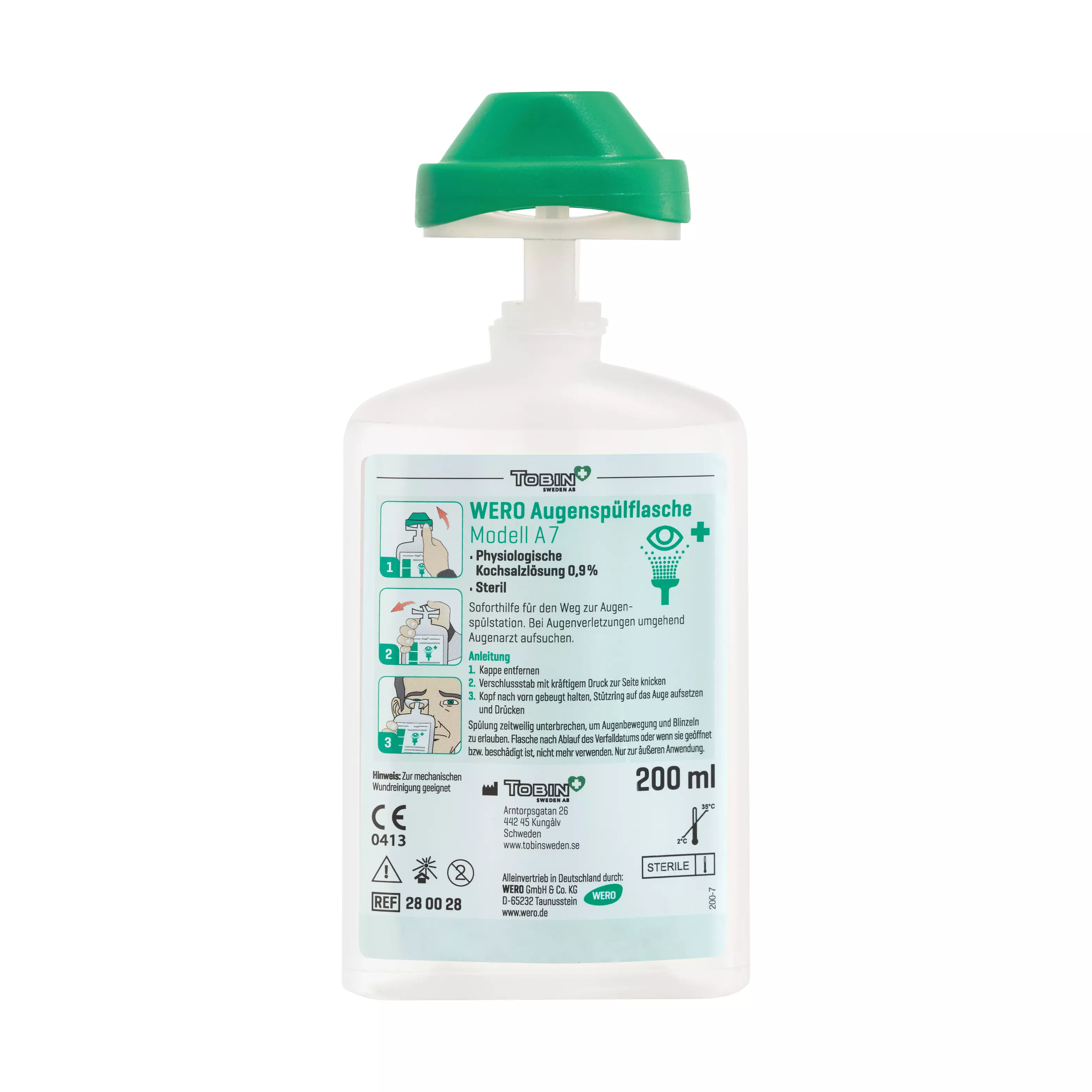
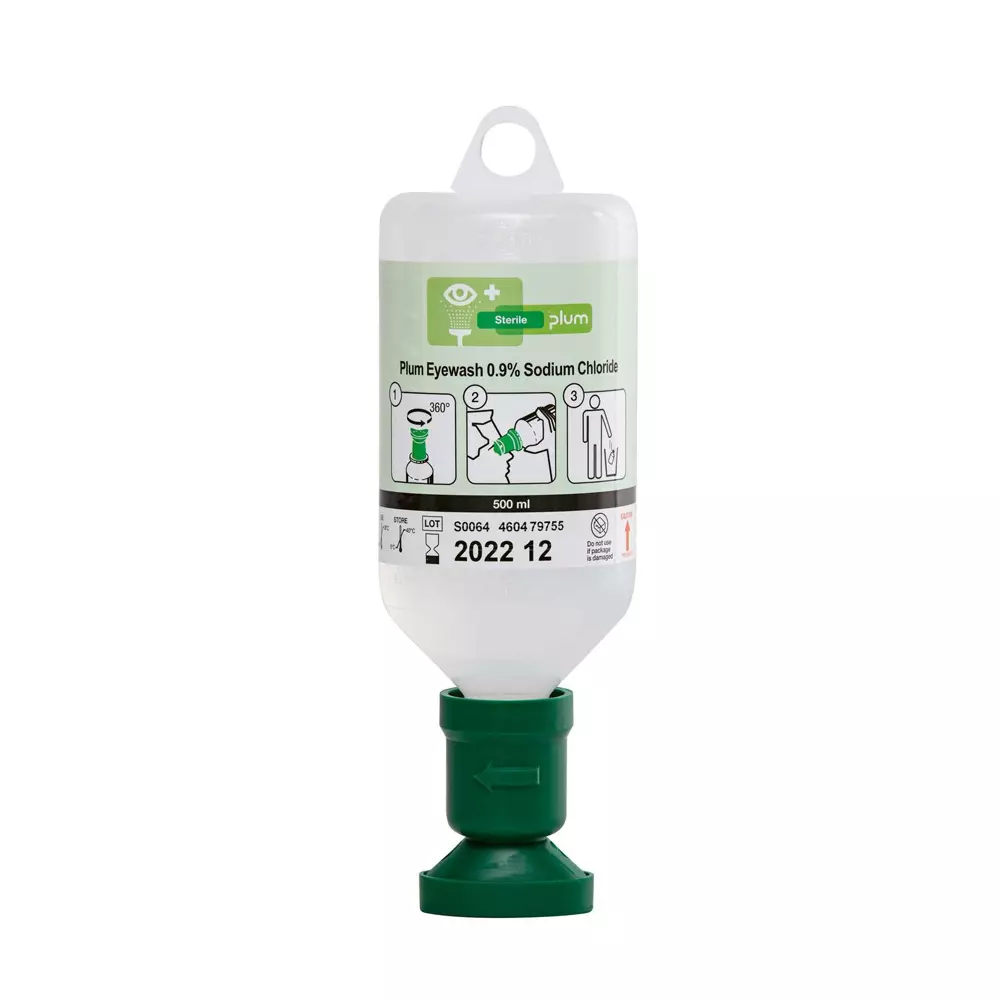
In general, a distinction is made between rinsing with saline solution (sodium chloride solution) and buffered eye rinses. Before rinsing, the harmful substance to be removed from the eye should be determined. If it is more likely to be mechanical substances such as dirt or dust particles, it is advisable to use an eye wash bottle with sodium chloride. The pH value of this eye rinsing solution corresponds to the pH value of the natural tear fluid. Saline solutions are therefore also suitable for mechanical wound cleaning.
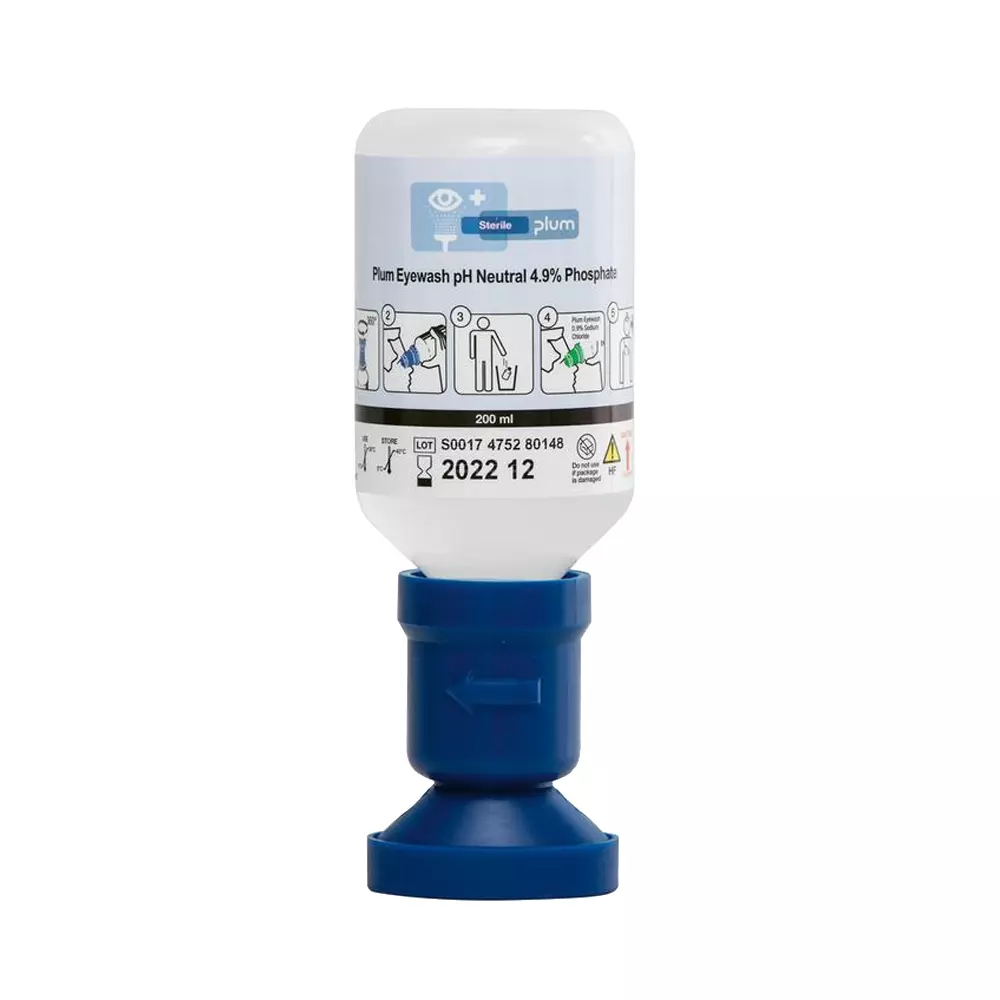
If the eyes are contaminated by chemicals such as solvents, acids or alkalis, the use of a buffered rinsing solution is recommended. This neutralises the chemical and can thus prevent possible chemical burns.
Always check the safety data sheets of the solutions used beforehand. There you will find precise information on which eyewash should be used. Even with a buffered eyewash, however, there is no fundamentally incorrect application. Even if it is not actually necessary to neutralise the pH value of the eye, the rinse itself cannot cause any damage to the eye.
How is an eye wash bottle used?
As there are different eye wash bottle models, the application of the bottles may vary. However, almost all bottles have pictorial instructions printed on them.

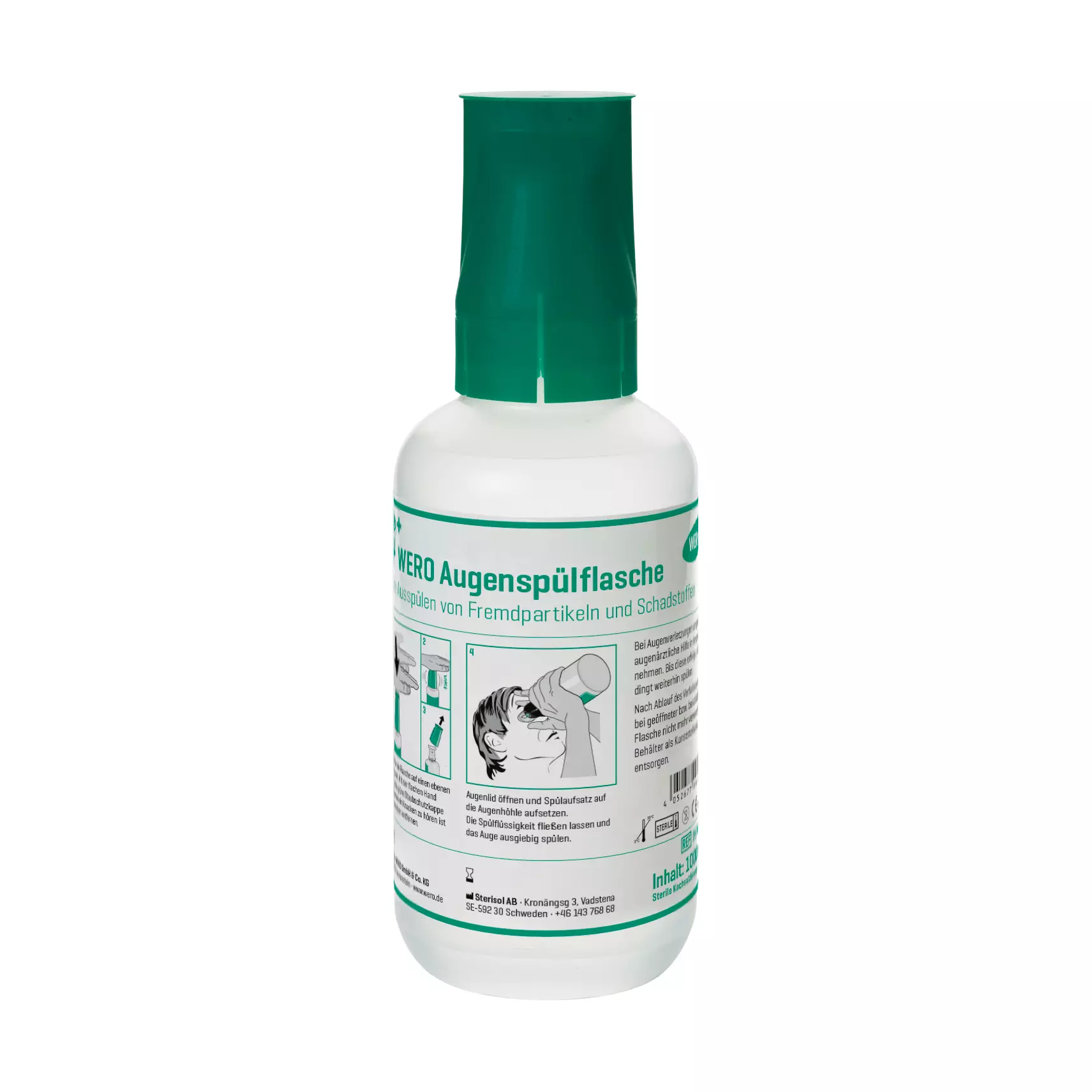
The following is an example of how to use and rinse the WERO eye wash bottle model P 5.
- First open the eye wash bottle by turning and removing the top cap and then ensure that the eye wash solution can flow out of the bottle. To do this, turn the bottle upside down and move the base of the bottle in one direction until the liquid emerges from the spray head.
- Place your head on the back of your neck for application.
- Pull the eyelids apart, this is the only way to clean the eye completely. This step should ideally be carried out with fingers or gloves that are as sterile as possible so as not to further contaminate the eye. In practice, this is usually potentially difficult to realise - in case of doubt, speed is the decisive factor.
- Now place the bottle on the affected eye with the eye cup facing downwards.
- Rinse the eye for as long as necessary, depending on the situation. If in doubt, rinse the eye until the bottle is empty.
- After rinsing the eye, consult a doctor to have the affected eye examined for deeper injuries.
WERO eye wash bottles - Which is the right one for your requirements?
The main differences between our eye wash bottles lie in the eye wash solution itself and in the size and application of the bottle.
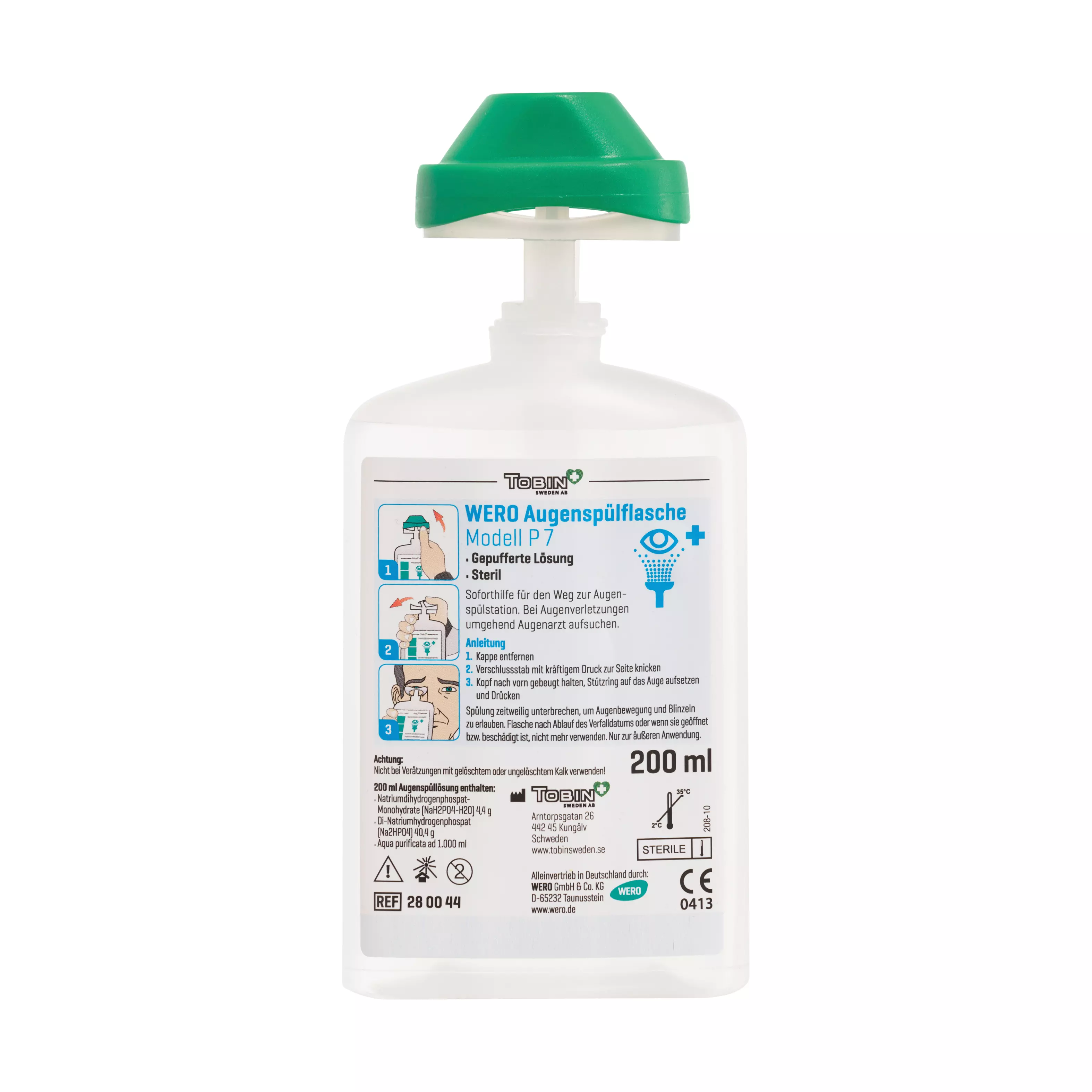
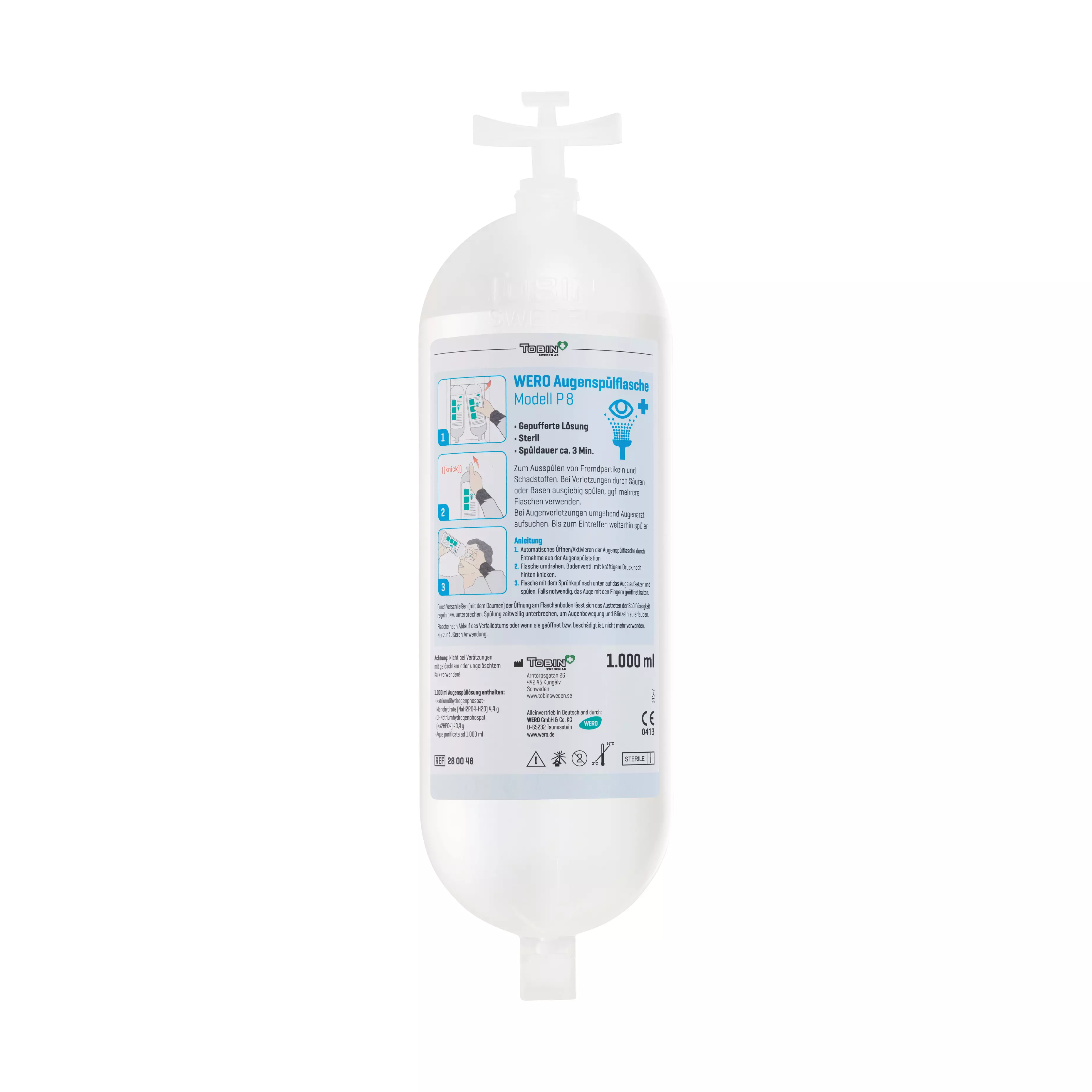
Available sizes are 200ml, 500ml and 1000ml. It's up to you to decide which size is right for you. What are your priorities? Is convenient transport important to you, or are you willing to accept a little more weight for a longer rinsing time?
This decision should depend on the risks you are exposed to as described above, i.e. the flushing time and flushing solution required. With a 500 ml bottle, the eye can be rinsed for approximately 1.5 minutes.
In addition to our eye wash bottles, we also offer WERO eye wash ampoules. These are 20 ml ampoules containing saline solution. They are mainly used for minor eye contamination, such as dust particles.
The ampoules provide maximum mobility as they can be stored in any trouser pocket. However, they are definitely no substitute for eye wash bottles, as the overall rinsing time is significantly shorter. The direct counterpart - and only suitable for stationary use - are eye showers. According to BG regulations, particularly hazardous workplaces, such as laboratories, must have an eye shower.


